

That actually works…
A strong content strategy is the difference between posting randomly and building a system that consistently attracts, engages, and converts your audience. Many businesses create content, but few do it with a clear purpose, leading to wasted time, inconsistent messaging, and little return.
Here’s how to build a content strategy that works.
Table of Contents
1. Start With Clear Goals
Before creating anything, define what success looks like. Content without a goal is chaotic.
Ask yourself:
- Do I want to generate leads?
- Build brand awareness?
- Educate my audience?
- Drive sales?
Your goals will shape everything, from the type of content you create to where you distribute it.
For example:
- Lead generation → Focus on guides, case studies, and gated content
- Brand awareness → Social media, video content, storytelling
- Sales → Product-focused content, testimonials, landing pages
Be specific. Instead of “get more traffic,” aim for something like “increase organic traffic by 30% in 6 months.”

2. Understand Your Audience…Like Really Understand Them
Great content speaks directly to a specific audience. Weak content tries to speak to everyone. Don’t fall into the trap of thinking your product, service or content is targeted at everyone. Find your niche!
Build audience personas by identifying:
- Who they are (job title, industry, demographics)
- Their biggest challenges
- Their goals and motivations
- Where they spend time online
Go beyond surface-level data. Look at:
- Customer interviews
- Sales team feedback
- Website analytics
- Comments and reviews
The better you understand your audience, the easier it is to create content that resonates.
3. Map Content to the Buyer Journey
Not all content serves the same purpose. Some people are just discovering your brand, while others are ready to buy.
A strong strategy covers all stages:
Top of Funnel (Awareness)
- Blog posts
- Social media content
- Educational videos
- “How-to” guides
Middle of Funnel (Consideration)
- Case studies
- Comparison articles
- Webinars
- Email nurturing
Bottom of Funnel (Conversion)
- Testimonials
- Product demos
- Landing pages
- Free trials or consultations
If you only create top-of-funnel content, you’ll get traffic but no conversions. Balance is key.
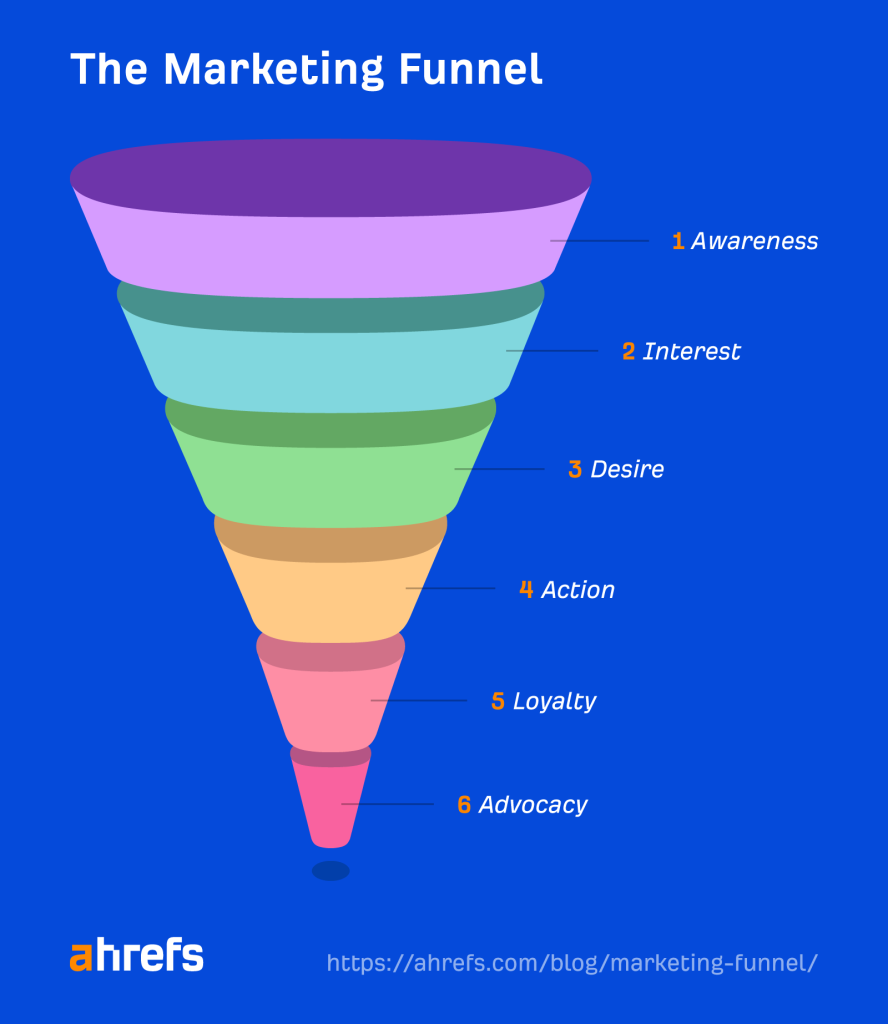
Ahrefs Marketing Funnel – Ahrefs
4. Do Smart Keyword and Topic Research
Your content should align with what people are actually searching for.
Focus on:
- High-intent keywords (e.g., “best CRM for startups”)
- Problem-based keywords (e.g., “why my website isn’t converting”)
- Long-tail keywords (more specific, lower competition)
Use tools like:
- Google Keyword Planner
- Moz
- Ahrefs
- SEMrush
But don’t just chase volume. Prioritise relevance and intent.
5. Choose the Right Content Formats
Different audiences prefer different formats. A good strategy mixes formats based on your goals and resources.
Common formats include:
- Blog posts (great for SEO)
- Videos (high engagement)
- Social media posts (distribution and awareness)
- Email newsletters (nurturing and retention)
- Case studies (credibility and conversion)
- Infographics (easy-to-digest insights)
Don’t try to do everything at once. Start with 2–3 core formats and do them well.

ERYC, Adult Learning Centre Filming – Eon Visual Media
6. Build a Content Calendar
Consistency beats intensity. A content calendar helps you stay organised and maintain momentum.
Plan:
- Topics
- Formats
- Publishing dates
- Distribution channels
For example:
- 1 blog post per week
- 3–5 social posts per week
- 1 email newsletter per week
Use tools like Loomly, Notion, Trello, or Google Sheets to manage your calendar and plan ahead.
7. Focus on Quality Over Quantity
Publishing more content doesn’t guarantee better results. In fact, low-quality content can hurt your brand.
Instead:
- Create fewer, higher-quality pieces
- Go deeper into topics
- Provide real value (insights, examples, data)
- Make content actionable
A single well-optimised article can outperform dozens of mediocre ones.

8. Optimise for SEO and Conversion
Content should not only attract traffic but also convert visitors into leads or customers.
For SEO:
- Use keywords naturally
- Optimise titles and meta descriptions
- Structure content with headings
- Add internal links
For conversion:
- Include clear calls to action (CTAs)
- Offer lead magnets (guides, templates)
- Use social proof (testimonials, case studies)
Every piece of content should have a purpose beyond just being read.
9. Distribute Your Content Effectively
Creating content is only half the job. Distribution is just as important. Check out our blog on why you should use platform-specific content design.
Promote your content through:
- Social media platforms
- Email newsletters
- Paid ads
- Online communities
- Partnerships and collaborations
Repurpose content to maximise reach:
- Turn a blog post into multiple social posts
- Convert insights into a video
- Break content into email sequences
This helps you get more value from each piece.

10. Measure, Learn, and Improve
A good content strategy evolves over time. Track performance and adjust based on what works.
Key metrics to monitor:
- Website traffic
- Engagement (time on page, shares)
- Conversion rates
- Lead generation
Ask:
- Which topics perform best?
- Which formats drive engagement?
- Where are users dropping off?
Use these insights to refine your strategy continuously.
Consulting With an External Agency
A successful content strategy isn’t about doing more, but about doing the right things with intention.
When you:
- Set clear goals
- Understand your audience
- Create targeted, high-quality content
- Distribute it effectively
- And continuously optimise
…you turn content into a powerful growth engine.
If you approach content strategically rather than randomly, you won’t just create content—you’ll create impact.
If you’re still feeling lost, need some guidance, or need support with your content, strategy or implementation, drop us an email at [email protected]!

