

Need some marketing tips?
Marketing often gets framed as a mix of creativity and luck, but in reality, it’s a structured discipline built on understanding people, solving problems, and communicating value clearly. Whether you’re promoting a small business, launching a startup, or growing a personal brand. No matter where you are in your journey, marketing comes down to a series of practical, repeatable steps. Scroll for some top marketing tips that can make a huge difference in your results – and that you might have forgotten about…
Table of Contents
1. Start with a Clear Understanding of Your Audience
The most common marketing mistake is trying to reach everyone. When your message is too broad, it resonates with no one, and it can alienate your actual target audience. Instead, define a specific audience:
- Who are they? (age, job, lifestyle)
- What problems do they face?
- What motivates their decisions?
- Where do they spend time online?
Marketing tips:
- Go beyond surface level demographics
- Become the customer – look from the outside in, not the inside out
Don’t just think about their age and what their hobbies are – that’s boring and isn’t actually super helpful. Try to tap into their psychology. Put yourself in their shoes and ask yourself what they actually want to see, what they want to achieve and whether they’re going to convert.
Once you understand your audience, you can tailor messaging that speaks directly to their needs rather than guessing and making generalised content.
2. Define Your Value Proposition
Your value proposition answers a simple question: Why should someone choose you over alternatives?
A strong value proposition is:
- Clear and easy to understand for people outside of your organisation
- Specific and focused on real, genuine benefits
- Differentiated and doesn’t blend in with competitors
Avoid vague claims like “high quality” or “great service.” Instead, highlight concrete outcomes:
- Save time
- Reduce costs
- Improve performance
- Solve a specific pain point
Think in terms of results, not features. People don’t care if you produce really high-quality work if your turnaround time is too long for their needs. People don’t care if you use the most up to date technology if it doesn’t have any direct impact on their results.
Marketing tips:
- Your customers are more selfish than you think
- The above is not a bad thing
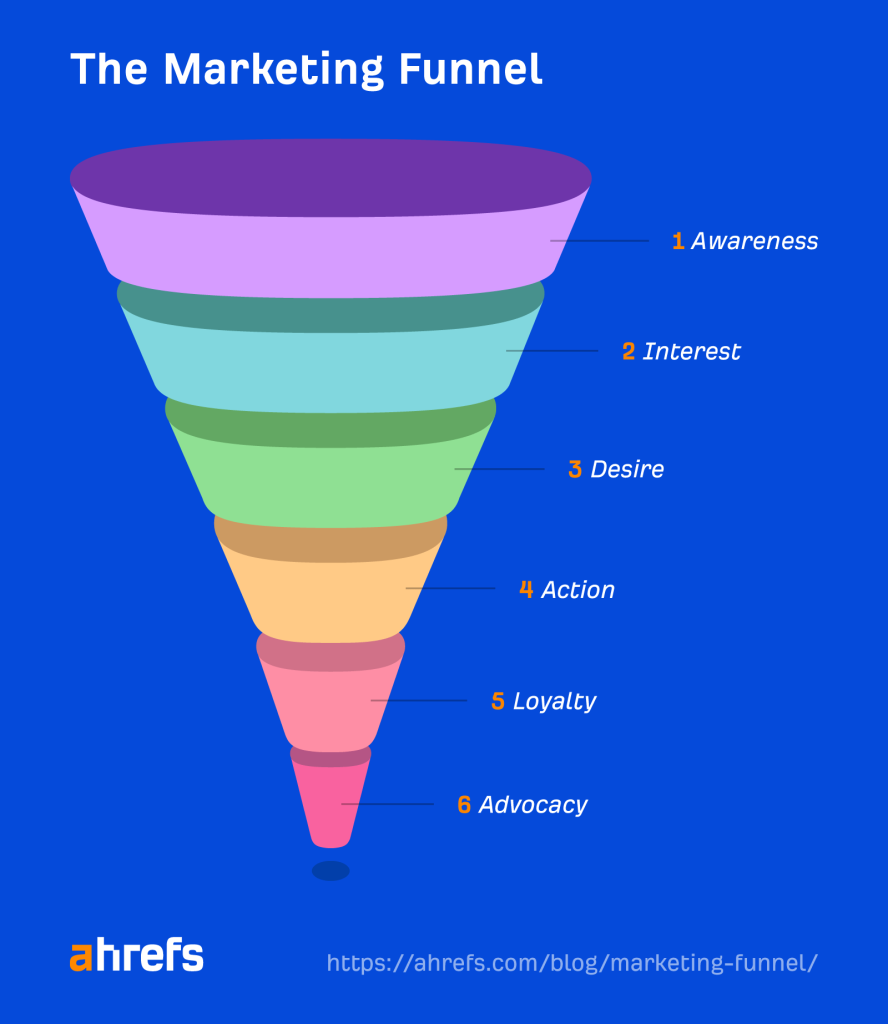
3. Build a Simple Marketing Funnel
Awareness → Interest → Consideration → Conversion → Retention
Each stage requires a different approach:
- Awareness: social media posts, ads, blog content
- Interest: helpful guides, videos, email sign-ups
- Consideration: case studies, testimonials, comparisons
- Conversion: clear offers, calls-to-action
- Retention: follow-ups, loyalty programs, support
If your marketing isn’t converting, the issue is often a missing or weak stage in this funnel—not the entire strategy.
There are a whole range of different marketing funnels, but all serve a similar purpose. It’s all about whittling down the awareness your brand gets into conversions. As it trickles down the funnel, potential customers get more invested, more involved, and want to engage with your brand in the form of a conversion.
4. Choose the Right Channels (Not All of Them)
You don’t need to be everywhere. Focus on platforms where your audience already spends time.
Examples:
- Visual products → Instagram or TikTok
- B2B services → LinkedIn
- Educational content → YouTube or blogs
- Local businesses → Google listings and reviews
Start with one or two channels and do them well before expanding. Spreading yourself too thin leads to inconsistent results.
5. Create Content That Provides Value
Content marketing works when it helps people, not when it just promotes you.
Good content:
- Answers common questions
- Solves real problems
- Educates or entertains
- Builds trust over time
Use a mix of formats:
- Short posts for quick engagement
- Long-form blogs for depth
- Videos for clarity and reach
- Emails for direct communication
Marketing tips:
- If your content only talks about your product, it’s unlikely to perform well
- It needs to be a combination of value proposition and promotion.
- But not too much promotion, because people don’t want to be sold to.
6. Use Clear and Compelling Calls-to-Action
People rarely take action unless you guide them. Every piece of marketing should answer: What should the audience do next?
Examples:
- “Download the guide”
- “Book a free consultation”
- “Start your trial”
- “Subscribe for updates”
Keep it simple and visible. Avoid overwhelming users with too many choices. One strong call-to-action is usually enough. A/B testing is a great way to test different CTAs and ensure you’re making the right decisions that your customers engage with.
Marketing tips:
- TEST! TRACK! MONITOR! CHANGE!
- You’ve got nothing to lose by testing different things
7. Leverage Social Proof
People trust other people more than they trust brands. Social proof reduces uncertainty and builds credibility.
Forms of social proof include:
- Customer reviews
- Testimonials
- Case studies
- User-generated content
- Ratings and endorsements
Even a few authentic reviews can significantly improve conversion rates. Display them on your website. Have them in high traffic areas where people are likely to be making decisions. Use them across your social media and other promotional assets! Social proof should be omnichannel, so make sure you’re using it to your advantage!

8. Test and Improve Continuously
Marketing is not “set and forget.” What works today may not work tomorrow.
Key areas to test:
- Headlines
- Images or visuals
- Ad copy
- Email subject lines
- Landing page layouts
Website copy that you’ve optimised 2 years ago might be out of date now. Always keep refreshing and looking for ways to tweak, improve and grow.
9. Focus on Consistency Over Perfection
One of the biggest barriers in marketing is overthinking. Many people delay launching campaigns because they want everything to be perfect.
In reality:
- Imperfect campaigns still generate data
- Data leads to improvement
- Improvement leads to results
Consistency beats occasional bursts of effort. Posting regularly, refining your message, and staying active will outperform sporadic “perfect” campaigns.
10. Align Marketing with Business Goals
Marketing should always connect back to measurable business outcomes:
- Sales
- Leads
- Sign-ups
- Customer retention
Avoid vanity metrics like follower counts if they don’t translate into real results. A small, engaged audience is far more valuable than a large, inactive one.
11. Keep the Customer Experience in Mind
Top marketing tip: marketing doesn’t end when someone clicks or buys. The full experience matters:
- Is your website easy to navigate?
- Is your checkout process smooth?
- Do you respond quickly to inquiries?
Poor experiences can undo great marketing. Think of marketing as part of a larger system, not an isolated activity.
Effective marketing isn’t about clever tricks or chasing every new trend. It’s about understanding your audience, delivering genuine value, and communicating clearly across the right channels.
If you focus on:
- Knowing your customer
- Solving real problems
- Being consistent
- Measuring what matters
—you’ll build a marketing approach that’s not only practical but sustainable.
One final marketing tip: just give it a go. Whatever the idea is, try it out. As long as you’ve backed it with good reasoning, it’s manageable, and it’s something you think your audience will engage with, give it a go.
Let’s chat more about marketing: [email protected]!

